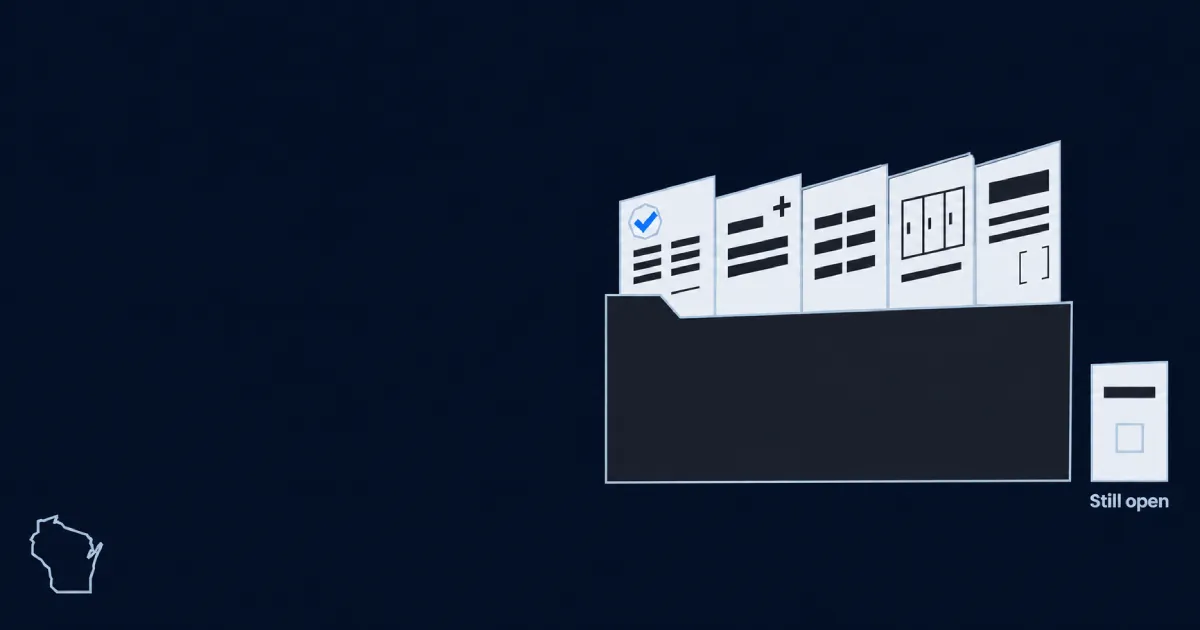
The contractor's closeout file: what to keep after the job is done
The tools are loaded. The last piece of trim is installed. The customer has the invoice.
Three months later, they ask which finish was used on the cabinets. Six months later, a supplier questions which delivery belonged to the job. A year later, somebody wants to know why the final contract price was different from the first number.
The work may be finished. The need for a clear record is not.
A useful closeout file lets someone reconstruct what was agreed, what changed, what was supplied, what was paid, and what remains open without asking the original crew to remember it all.
Close the record, not just the invoice
Closeout is a business process. It is not one magic signature that makes every obligation disappear.
Separate three questions:
- What work is complete, and what remains?
- What is the current financial position under the agreement?
- What documents and information need to be delivered and retained?
The answers may not line up on the same day. A job can have installed equipment but an outstanding instruction manual. A final invoice can still have a disputed item. A walkthrough can identify a remaining repair.
Record each status honestly. “Closed” should not hide unfinished work or unresolved questions.
Keep the signed agreement and its attachment set
The file starts with what the parties actually signed, not the latest editable draft.
Retain the original executed agreement, incorporated drawings and selections, and the relevant attachment versions. Preserve available signature and delivery records as well. If you cannot tell which drawing accompanied the signed contract, a folder containing six drawings is not yet a clear record.
The photo-documentation habits used during the job are useful here too: dates, locations, and captions make the record intelligible to someone who was not there.
Keep rejected proposals or superseded drafts separately labeled where retained. They can help explain the history, but they should not be mistaken for approved scope.
Reconcile every change against the final price
Make a short index of approved changes, including additions, deletions, credits, substitutions, and schedule changes. Keep the approved documents behind the index.
A fictional reconciliation might look like this:
| Item | Amount |
|---|---|
| Original contract | $24,000 |
| Approved change 01: added cabinet work | +$1,200 |
| Approved change 02: material-selection credit | −$350 |
| Approved change 03: added finish work | +$650 |
| Final agreed contract price | $25,500 |
| Payments received and applied | −$23,000 |
| Remaining balance under this example | $2,500 |
This example assumes no disputed charges, retainage, or other adjustments. The actual due date and right to collect follow the agreement and applicable law, not the arithmetic alone.
Do not count a requested or unsigned extra as approved merely because it appears in your spreadsheet. Keep the status visible and resolve disagreements directly. The change-order checklist explains the information that should already exist behind each adjustment.
Keep the payment and lien records together
Include customer payment records, relevant subcontractor and supplier invoices, actual waivers, and evidence of notices delivered during the job.
For covered home improvements, the buyer's lien-waiver notice belongs before contracting, not at closeout. A closeout folder should preserve evidence of that earlier step, not be used to suggest late delivery fixes the timing.
If something is missing, mark it as missing and ask counsel how to address it. Do not backdate a notice, recreate an acknowledgement as if it were contemporaneous, or treat your own payment receipt as another party's waiver.
Do not wait until closeout to disclose warranties
Handing over manuals and warranty copies at the end is useful. It is not permission to defer every warranty document until then.
For covered home improvements, ATCP 110.04 generally requires warranty documents when the buyer enters the contract, including written documentation of oral warranties. A manufacturer's product warranty may instead be provided at installation, or at project conclusion if the contract specifies that timing.
The closeout file should therefore contain both the documents and evidence of when they were supplied.
Useful handoff information includes the actual equipment model and serial number, finish or product details, care instructions, registration responsibilities, and the correct warranty contact. Separate your workmanship warranty from a manufacturer's product warranty. Do not invent coverage, exclusions, or registration deadlines that the actual warranty does not contain.
Record what remains open
A punch list should identify the item, location, responsible party, next action, and target date. Distinguish a correction to agreed work from a new customer request.
“Touch up paint” is difficult to close. “Repair the marked paint scuff on the inside face of pantry door P-3” is something both sides can inspect.
Keep dated completion photos or other records when the item is resolved. If a target date changes, communicate the update. A punch-list note should not quietly override a contract deadline; use the schedule-change process where needed.
A customer walkthrough is not a municipal inspection. A passed inspection is not agreement that every commercial or aesthetic issue is resolved. Keep each record for the question it actually answers.
Build two packages from one project file
The customer needs a usable handoff. Your business needs a fuller working record.
| Customer handoff | Contractor's retained record |
|---|---|
| Signed agreement and approved changes | Agreement history and supporting approvals |
| Relevant final drawings, selections, and product information | Original photos, dated markups, and revision history |
| Applicable warranty and care documents | Copies plus delivery evidence and warranty communications |
| Payment summary and requested waivers | Payment references, invoices, and waiver correspondence |
| Remaining-item list and appropriate inspection records | Open-item history, inspection records, and project communications |
This table is a recommended organization method, not a complete statement of document-delivery rights. Follow the contract and law. Keep unrelated internal information and personal data out of a routine customer handoff.
Open the customer package before sending it. Can they read the model number? Do the links work? Is the latest approved selection included? A handoff that only works inside your account is not a useful handoff.
Decide retention with the right advisers
There is no sensible universal “delete every project after X years” rule to take from a short blog post. Contracts, warranties, tax records, insurance requirements, claims, and other obligations can call for different retention periods.
Set a written retention policy with counsel, your insurer, and your accountant. If a complaint or dispute arises, preserve relevant records and seek advice before routine deletion continues. Do not delete messages or photos to make the history look cleaner.
Keep a secure backup of important final documents outside any single phone or account and test that it opens. Archiving a project to clear the active list is a different decision from destroying the underlying records.
ATCP 110 excludes new residences and qualifying major renovations, so its specific duties are not universal contractor law. The broader recordkeeping recommendations here are business practices, not a claim that every listed document is legally required on every job.
One last check before the file leaves the active list
Ask:
Could someone who did not run this job explain the signed scope, final price, latest agreed dates, payments, warranties, and remaining obligations from this file?
If the answer is no, close the gap while the people and records are still easy to reach.
That completes the documentation chain this series started with: define the job, record the changes, preserve the approvals, and keep a record that still makes sense after the work is done.
Where ScopeAccord fits
ScopeAccord organizes contracts and change orders by customer and project, retains signed copies, and supports project archiving. Those features help preserve the agreement side of the closeout record. They do not replace accounting records, all project communications, or a retention policy.
The interaction is conversationally AI-native where you describe and review the work. At the legal core, counsel-reviewed Wisconsin templates and verified calculations provide deliberate consistency. You remain responsible for the facts, the handoff, and the records your business needs to retain.
More in this series: Contractor documentation, plain and practical